Dhuvjan Monastery Restoration and Cultural Trails Project Monasteries of the Drino Valley, Albania
The Drino Valley is a place where ancient ruins, old monasteries, traditional villages and natural beauty blend together to reflect a long history of cultural exchange and community life.. Many of these heritage sites are still little known and not well connected to each other.
Through this project Cultural Heritage without Borders Albania (CHwB Albania) supported by the World Monuments Fund worked to connect the heritage of the Drino Valley and turn it into an nature-based tourism destination. The project combined conservation with better trails, visitor facilities, interpretation tools, digital access and active community involvement.
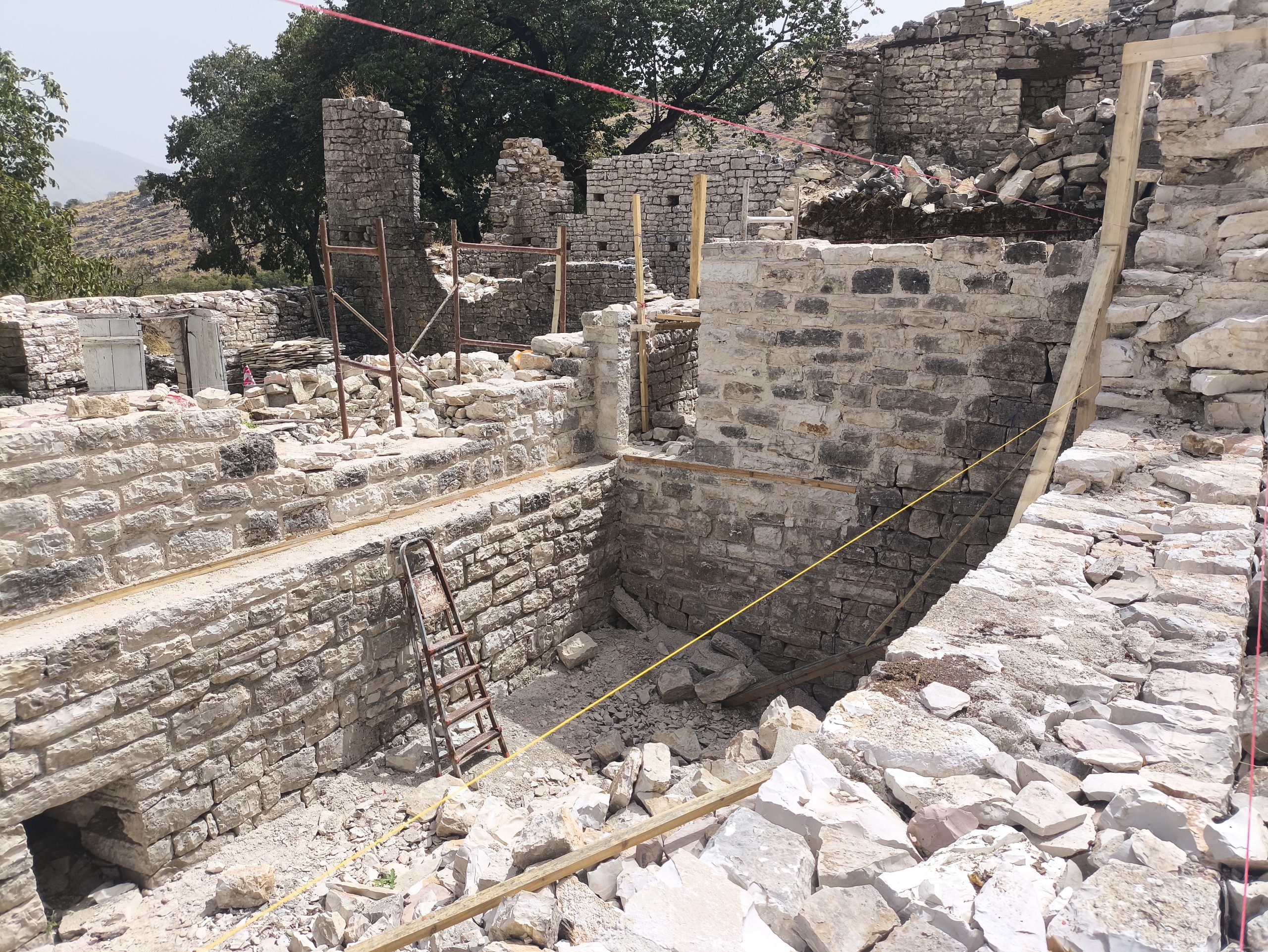
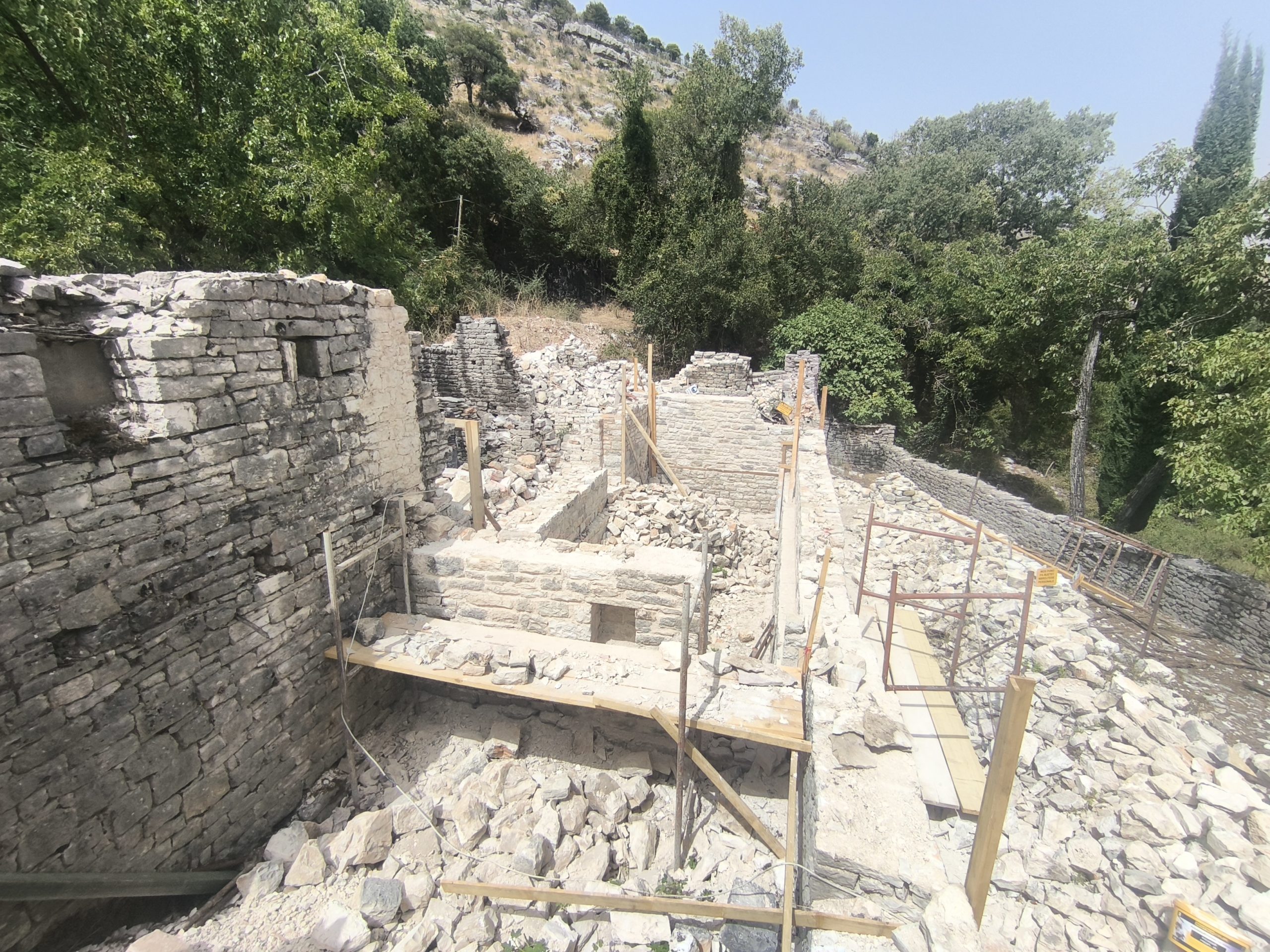
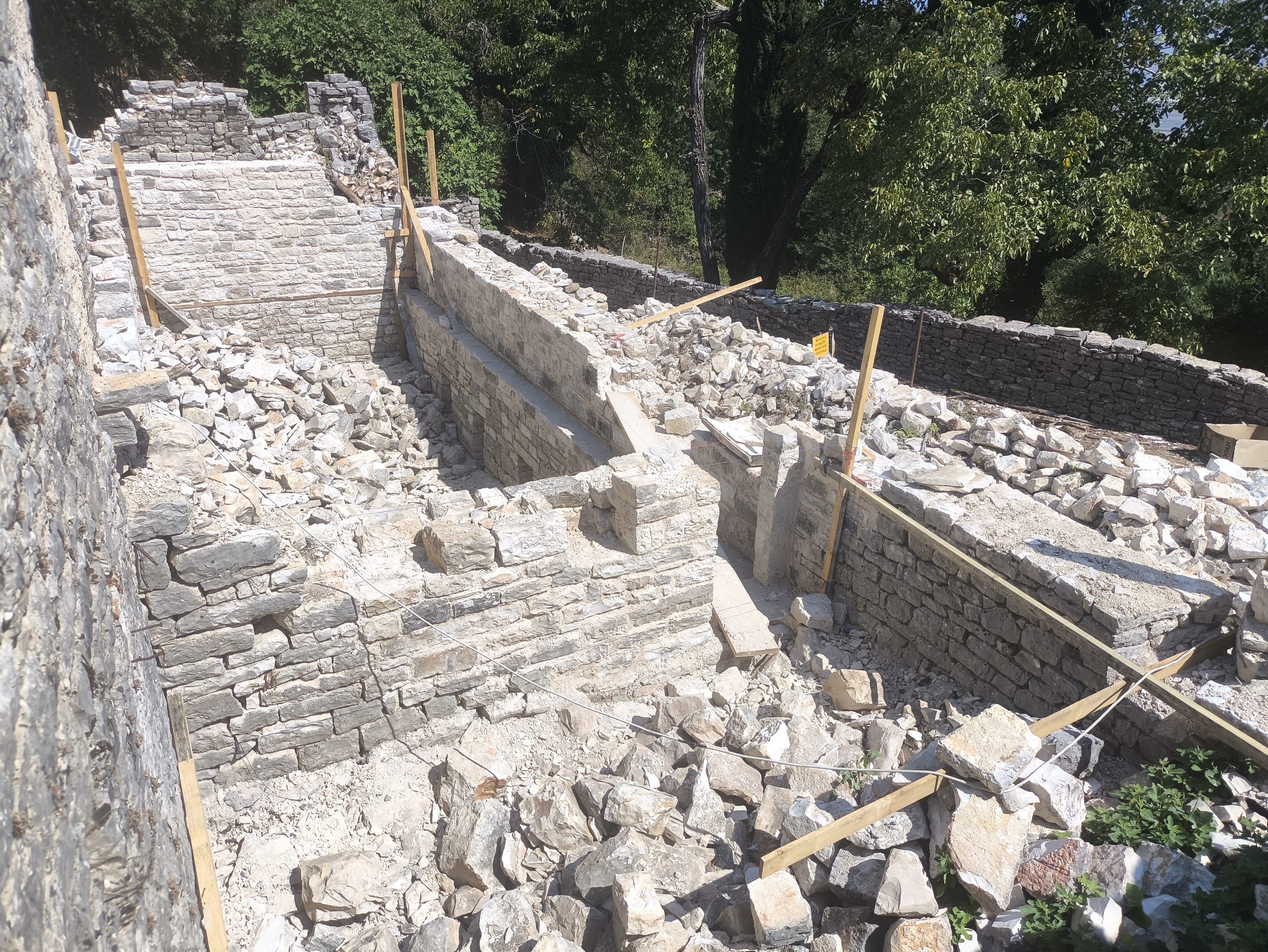
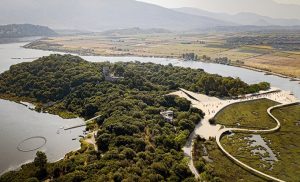
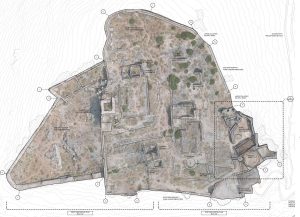
A major part of the project was the conservation of the Monastery of Saints Quiricus and Julietta in Dhuvjan. This site is a religious, historical and educational landmark in the valley. Restoration began in July 2025. The first step was clearing away plants and carefully collecting and organizing stones that had fallen from the walls.
As the work continued a partial repair was made to the wall next to the church bell tower. The stairs and arcades on the side of the building were fully restored. On the side in the monastic living areas sections of the refectory wall were rebuilt to their original height and layout. Other work included restoring the roof of the entrance gate and conserving the upper masonry near the old canteen.
These efforts aim to stabilize the parts of the monastery that were falling apart reduce danger to visitors and protect the building’s look and history. By fixing structural issues and improving access and information the project hopes the monastery can once again be seen as a central piece of the valley’s cultural story.
The project also focused on linking the monastery with heritage sites through new and improved cultural trails. Field studies, GPS mapping and conversations with people helped identify and confirm old routes that once connected villages and settlements.
One main trail connects Hadrianopolis, the Dhuvjan Monastery, Haskovë, Vanistër Village and Vanistër Monastery. This route brings together ruins, religious buildings, traditional homes and open countryside—giving visitors a sense of the valley as a whole, not just a list of separate spots.
The trails were cleaned, marked and equipped with signs to make them easier and safer to walk. A full signage system was created in partnership with the Municipality of Dropull. An orientation panel was also added to help visitors understand the Drino Valley Cultural Trail and its most important sites.
Interpretation was another part. A new outdoor information panel about the Monastery of Saints Quiricus and Julietta was placed at Dhuvjan. It includes facts, old photos, a 3D model and text in Albanian, English and Greek. This helps visitors understand the monastery’s role in architecture, faith, education and culture.
The project also made the trails easier to access. The routes were uploaded to Wikiloc, a popular GPS platform. This gives visitors maps, elevation data and points of interest. In partnership with the World Monuments Fund and Bloomberg Connects, interpretive content was created for use. This includes QR codes that visitors can scan for information and the Bloomberg Audio Guide titled “The Drino Valley – Monasteries, Villages and Ancient Cities.” These tools let people learn about the valley’s history before and during their trip.
A full hiking map and visitor brochure were also made. It includes eight routes that connect monasteries, churches, old ruins, villages and natural areas. Designed as both a guide and a promotion tool the map encourages people to explore, discover heritage and spend time with local communities.
Local people were at the heart of the project. CHwB Albania worked closely with the Municipality of Dropull heritage experts, the Orthodox Church and residents throughout the planning of the trails and interpretive materials. The memories and knowledge of people helped identify old paths and better understand the cultural landscape.
The project also helped shape the future of tourism in the area. In January 2026 CHwB Albania hosted a tourism destination management workshop. 40 People attended—representatives from local and national institutions, tourism and heritage professionals and community leaders. The discussion focused on how to raise the profile of the Drino Valley build skills promote tourism improve visitor facilities and create better coordination among all partners.
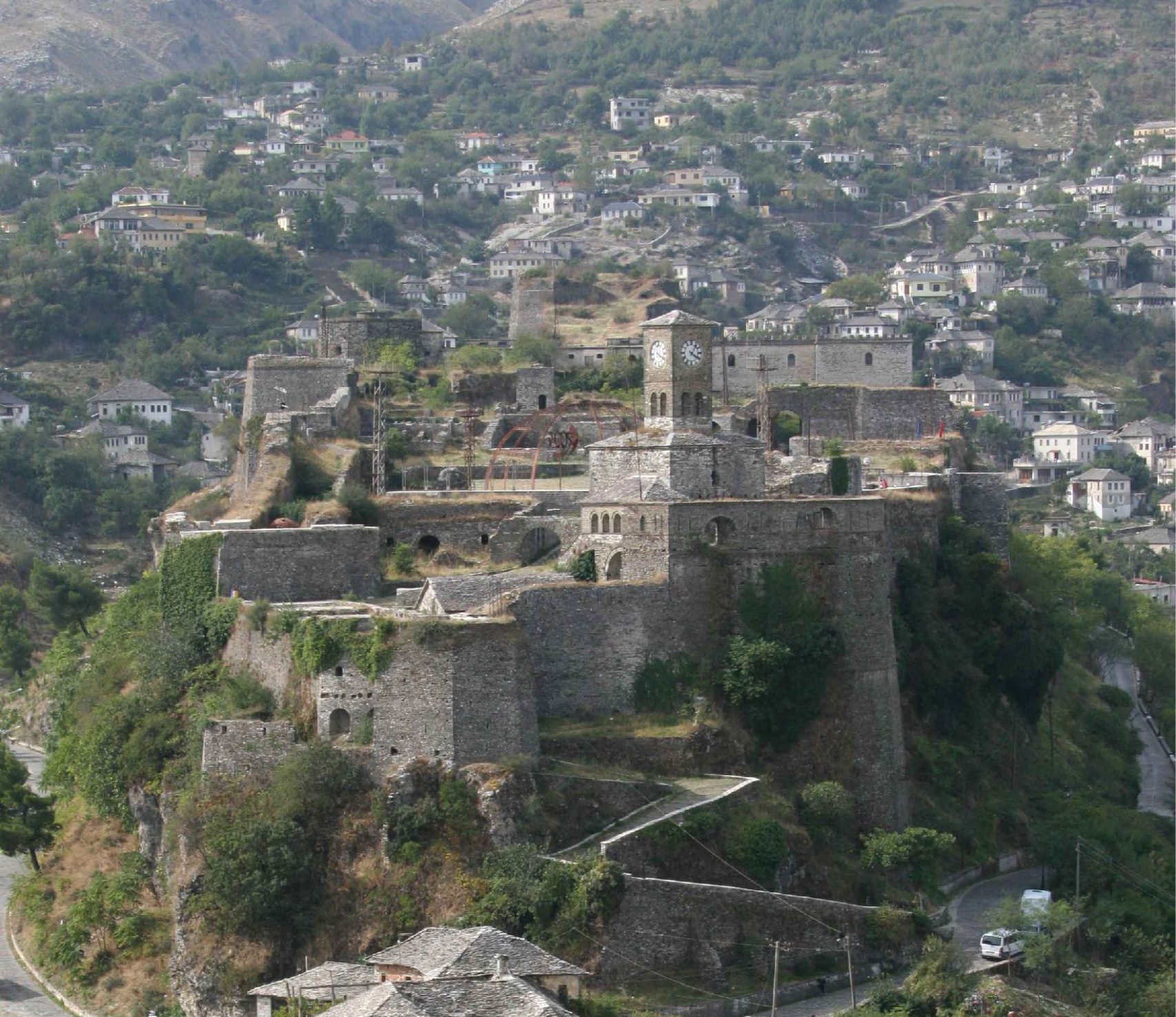
Looking beyond the trails the project also looked at the possibility of a future cultural route connecting Derviçan, Lazarat and Gjirokastër. Field research found pathways and important sites like the Monastery of the Annunciation in Derviçan the Ali Pasha Bridge and Gjirokastër Castle. These show potential to link the Drino Valley more closely with the nearby city of Gjirokastër.
By combining conservation, trail development, interpretation, digital tools and community involvement the project supports an unified way of managing heritage in the Drino Valley. It doesn’t just aim to save buildings. It aims to strengthen the ties between sites, monasteries, villages, landscapes and the communities that keep the valley’s identity alive.
At the end the project shows the Drino Valley as a living landscape. It is a place where heritage can support learning, exploration, sustainable tourism and local growth.. Most importantly it ensures that the stories and places of the valley remain open and meaningful for future generations.
Achievements:
– Conservation and restoration works at the Monastery of Saints Quiricus and Julietta in Dhuvjan
– Stabilization and repair of deteriorated masonry and restoration of stairs and arcades
– Clearing and preparation of the monastery site and organization of collapsed masonry
– Development and verification of cultural trail routes connecting Hadrianopolis, Dhuvjan, Haskovë and Vanistër
– GPS mapping and documentation of cultural and natural points of interest
– Cleaning, marking and improvement of historic pathways
– Development and installation of multilingual interpretation at Dhuvjan Monastery
– Development of an orientation panel for the Drino Valley Cultural Trail
– Installation of directional and interpretive trail signage
– Digital mapping and publication of project-supported trails on Wikiloc
– Development of an eight-route hiking map and visitor brochure
– Development of digital interpretation content with WMF and Bloomberg Connects
– Development of the Bloomberg Audio Guide The Drino Valley – Monasteries, Villages and Ancient Cities
– Assessment of a potential future cultural route connecting Derviçan, Lazarat and Gjirokastër
– Stakeholder workshop with approximately 40 participants on sustainable tourism and destination management
– Strengthened cooperation, between local authorities, heritage institutions, religious institutions and local communities








 English
  Albanian